
Review of sectoral climate change scenarios
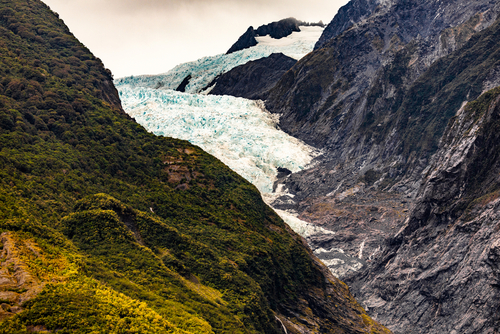
Franz Josef Glacier has receded due to climate change.
Futures thinking climate scenarios
As part of the first round of Climate Related Disclosures, 13 key sectors across Aotearoa New Zealand have produced climate scenarios. This was the largest consistent and coordinated exercise in futures thinking completed across Aotearoa New Zealand to date and comprises an impressive body of work.
What is futures thinking?
Futures thinking does not aim to predict the future or state that there is only one (pre-determined) future. Instead, based on expertise, data and evidence about the present, it seeks to explore a range of possible futures, their consequences and potential responses. Through this process, futures thinking can help uncover assumptions and increase the space of possible responses that are being considered by decision makers.
Why climate-based scenarios?
Climate change is likely to be one of the biggest challenges that our society faces in the coming decades. How big that challenge is depends largely on how quickly we, as a society, act. Many industries will need to change how they operate, both to reduce emissions and to adapt to a changing climate. The sectoral climate scenarios reviewed in this report cover all these issues.
PCE current work exploring futures thinking
The Parliamentary Commissioner for the Environment is currently undertaking a separate futures thinking exercise as part of the next phase of the work programme on “Resource flows and waste generation”.
See the latest report here or explore the report summary with our interactive story map here.
Report overview
To our current knowledge, this report is the first comprehensive review of the publicly available sectoral climate scenario reports (12 out of 13 are publicly available). The review identifies common messages by interrogating the following questions:
- What issues do each of the scenarios consider?
- What are the key conclusions for the future of New Zealand which can be drawn from the 12 sectoral scenarios?
- What examples were there of good or innovative practice in the scenarios?
- What are the key opportunities to improve the process for the future?
The Policy Hub at Victoria University undertook this review for PCE and the results can be downloaded from the PCE website. The review offers important insights for any practitioners using the tools of futures thinking as well as those working on long term public policy across Aotearoa New Zealand.